Wie der Weihnachtsmann in Italien heißt: Traditionen

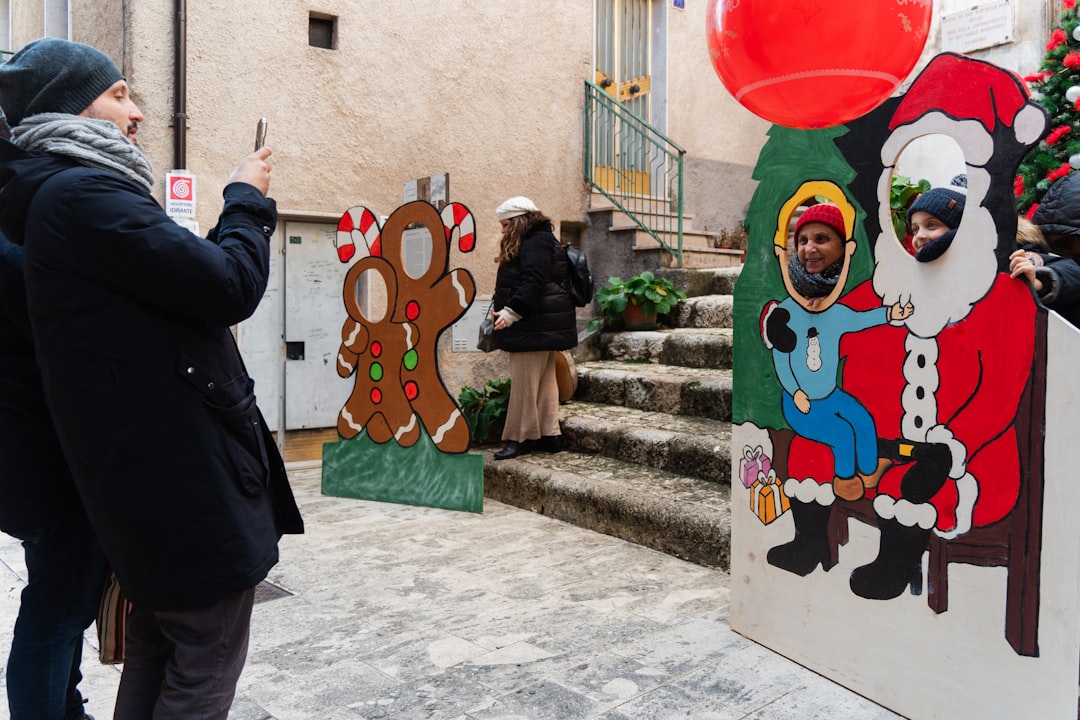
The term Weihnachtsmann in Italien can be misleading because Italy has more than one gift-bringer, and the best-known traditional figure is La Befana rather than a Santa-style character. In many Italian families, gifts are associated with specific dates across the season, including 25 December and 6 January, which helps explain why different figures appear in different regions and households. Alongside the modern Babbo Natale, Italy keeps a strong folk tradition centered on La Befana, whose visit is tied to Epiphany.
Key Facts at a Glance
- Traditionally, many children in Italy receive treats from La Befana during the night of 5-6 January, linked to Epiphany and the end of the Christmas season.
- La Befana is described in Italian folk belief as an old woman who brings children sweets or small gifts by placing them into a stocking.
- Children who behaved badly may find “coal” instead of sweets, and today this coal is commonly made from sugar mass rather than real coal.
- According to Italienisch Online Lernen, the official Italian Christmas season begins on 8 December (Immacolata Concezione) and runs until 6 January, ending with Befana celebrations.
- According to Visit Tuscany, Epiphany is treated as the last day of Christmas celebrations in Italy, after which many families remove the Christmas tree and nativity scene.
- The modern Santa figure in Italy is usually called Babbo Natale and is associated with 25 December, while regional gift-bringers may appear on earlier December feast days.
Einleitung: Der Weihnachtsmann in Italien, Eine andere Tradition
In German-speaking countries, children often expect the Weihnachtsmann on or around 24 December. The Weihnachtsmann in Italien does exist as a concept, but Italy’s older and widely recognized gift-bringer in popular tradition is La Befana, who arrives at Epiphany in early January. The result is a calendar in which “who brings the gifts” can depend on the family, the region, and the day being celebrated.
In contemporary Italian usage, Babbo Natale is the closest equivalent to a Santa figure and is generally connected with Christmas Day. In parallel, La Befana remains culturally prominent as a folk character who brings sweets and small gifts on 6 January. Italian Christmas celebrations therefore often feel extended, with attention distributed across multiple dates rather than focused on one evening.
That longer rhythm is also reflected in how Italians describe the season itself. According to Italienisch Online Lernen’s overview of Christmas in Italy, the Christmas period officially begins on 8 December (Immacolata Concezione) and continues until 6 January, when it ends with Befana-related festivities. This structure helps explain why a search for “Weihnachtsmann in Italien” leads quickly to discussions of both Babbo Natale and La Befana, since each belongs to a different point in the seasonal timeline.
La Befana: Die traditionelle Geschenkebringerin Italiens

La Befana is a central figure in Italian folk belief and is often referred to in German-language explanations as a “Christmas witch,” although her role is closer to a benevolent gift-bringer than a frightening character. In Italian tradition, she is described as an old woman who gives children presents during the night leading into 6 January. This specific timing is consistent across many descriptions of the custom, including the entry on Befana, which identifies her as an old woman in folk belief who brings gifts to children on the night of 6 January.
Iconography matters for understanding why she stands out compared with the Weihnachtsmann in Italien narrative. La Befana is typically shown smiling and riding astride a broom, a depiction also described on Wikipedia’s Befana page. That broom imagery is also tied to how her arrival is imagined. According to Visit Tuscany’s explanation of La Befana, she comes down the chimney to fill stockings with sweets, which anchors a very concrete household practice: children hang up a stocking, and the gifts appear inside it.
What she leaves depends on a moral script that children understand immediately. The standard description is that well-behaved children receive sweets or small gifts placed in a stocking, while poorly behaved children receive coal. The “coal” detail is documented in the Befana article, which notes that today the coal is typically made from sugar mass rather than real coal. Visit Tuscany also states the same basic contrast between sweets and coal for children who behaved badly during the year, in the night between 5 and 6 January, within its overview of the tradition.
For readers trying to map the Weihnachtsmann in Italien to something familiar, the easiest practical translation is this: Babbo Natale aligns with 25 December gift expectations in some households, while La Befana aligns with the stocking tradition on 6 January. The coexistence of both figures is one reason Italian Christmas customs can look different even from one family to the next.
Die Legende und Geschichte der Befana
The most widely repeated legend connects La Befana to the story of the Three Wise Men, which is why her visit is associated with Epiphany. In common retellings, the Wise Men ask for directions, or invite her to join their journey, and she later searches for the child, leaving gifts as she goes. While the details vary by region and storyteller, the consistent element is the link between a household visitor and the Epiphany date.
Over time, that link helped La Befana become one of the most recognizable Italian Christmas figures, even in areas where Babbo Natale is now common. The tradition’s endurance is visible in how fixed the date remains: the night of 5-6 January is the expected moment, which is also the timeframe highlighted by Visit Tuscany when describing when she brings gifts and fills stockings.
La Befana also has a documented political and social history in the twentieth century. According to the Befana entry, during Italian Fascism the “Befana fascista” was celebrated from 1928 in connection with Epiphany. The same source describes it as a charity initiative organized by the National Fascist Party that distributed gifts to poor children. This episode is important for historical accuracy because it shows how a folk custom could be adapted into a state-organized event, while the underlying date and the gift-giving theme remained familiar to families.
When researching Befana Italy traditions, it is therefore useful to distinguish between three layers: the religious calendar point (Epiphany), the folk character (La Befana as an old woman on a broom), and the historical uses of the tradition in specific periods such as the state charity campaigns documented from 1928 onward.
Die italienische Weihnachtszeit: Vom 8. Dezember bis 6. Januar

In Italy, the Christmas season is commonly understood as starting on 8 December, the Feast of the Immaculate Conception (Immacolata Concezione). Beyond its religious meaning, the date acts as a cultural green light for decorations, lights, and the first family gatherings connected with the end of the year. For many households, it is when the Christmas tree goes up and the nativity scene (presepe) begins to take shape, sometimes expanded little by little as the weeks pass.
From there, the calendar fills quickly. Advent Sundays lead into Christmas Eve and Christmas Day, followed immediately by Santo Stefano (26 December), a national holiday that extends the festive rhythm. In many areas, the days between late December and early January are marked by visits with relatives, shared meals, and local events, with the presepe remaining a central visual tradition in churches, homes, and town displays.
The season also includes the New Year period, when families often gather again for a long dinner, and cities host public celebrations. What makes the Italian timeline distinctive is that the festive arc does not end on 25 December or even on New Year’s Day. Instead, it points toward 6 January, Epiphany (Epifania), which is treated as the official conclusion of the holiday cycle.
On or shortly after 6 January, many families pack away the Christmas tree and take down the presepe, closing the season in a clear, almost ceremonial way. The final date matters because it ties the domestic traditions, public holidays, and religious calendar into one coherent period: 8 December opens it, 6 January closes it.
Babbo Natale und andere Geschenkebringer in Italien
Babbo Natale is the Italian version of Santa Claus, but in a modern sense. He reflects an imported, internationalized image of a winter gift-bringer, and in many families he is the one associated with presents on 25 December. You will see him in shop windows, advertising, school activities, and city decorations, often looking very similar to the North American and Northern European Santa figure.
At the same time, Italy has older and more regional gift traditions that do not always align with 25 December. In parts of the north, San Nicolò is celebrated on 6 December, and children may receive small gifts or sweets connected with Saint Nicholas. In other areas, especially where local devotion is strong, Santa Lucia on 13 December can play a similar role, with treats left in stockings or small surprises appearing overnight.
What makes contemporary Italy interesting is how these traditions overlap rather than cancel each other out. One child may receive a small gift from San Nicolò or Santa Lucia, open main presents from Babbo Natale on Christmas morning, and still expect La Befana on the night of 5-6 January. Families often adapt the pattern to their region, their grandparents’ habits, and practical concerns, such as traveling to see relatives on different dates.
As a result, modern Italian Christmas culture is less about one single gift-bringer and more about a layered season. The older figures remain meaningful in specific places, while Babbo Natale provides a shared, nationwide reference point shaped by media and global imagery.
Moderne Befana-Feiern und Bräuche heute

Today, La Befana is celebrated with a mix of family rituals and public events. Many towns and cities organize Befana festivals, markets, and small parades around Epiphany. You may see costumed Befana figures arriving in a main square, greeting children, handing out sweets, or posing for photos, sometimes alongside music and seasonal street food. In some places, the celebration is deliberately traditional, while in others it feels closer to a winter carnival that happens to feature a broom and a pointed hat.
Homes and shops often display Befana dolls (pupazzi della Befana), hung in windows, placed near stockings, or used as playful decorations. A classic modern treat is “coal” made of sugar (carbone dolce), a dark candy meant to echo the old idea that naughty children receive coal, even though it is sweet and meant for everyone. Stockings remain central, filled with chocolates, small toys, nuts, and tangerines, depending on family habit.
On 6 January itself, many families treat the day as a final gathering that closes the holiday season. Children check their stockings early, then the household might share a relaxed lunch, visit grandparents, or take a walk through a local event. Because Epiphany is the endpoint of the Italian Christmas calendar, celebrating La Befana often carries a particular mood: it is festive and playful, but also signals that ordinary routines are about to resume.
In that way, La Befana functions as both a gift-bringer and a seasonal marker. Her visit on 5-6 January is not only about sweets and small presents, it is the family-friendly finale to weeks of celebrations.
Vergleich: Weihnachtstraditionen in Italien und Deutschland
Italy and Germany both know multiple gift-bringers, but the line-up and timing differ. In Germany, many families associate gifts with either the Weihnachtsmann or the Christkind on 24 December (Heiligabend), often right after dinner. In Italy, gifts can come from Babbo Natale on the night of 24-25 December, yet another key figure is La Befana, who arrives on 5-6 January and fills stockings with sweets and small surprises. This means Italian children may experience a second highlight after Christmas Day, while German celebrations usually concentrate the main gift moment on Christmas Eve.
The broader season is also shaped differently. Germany’s most visible public build-up tends to be Advent: wreaths, calendars, and Christmas markets define the weeks before 24 December. After that, the mood becomes quieter, even though the Christmas period traditionally continues until early January. In Italy, the rhythm often feels more extended in practice, because the festive narrative runs from Christmas through Epiphany, with Befana acting as the clear finale.
There are strong commonalities: family meals, candles and lights, nativity imagery, and a focus on children’s excitement. A cultural distinction is how Italy blends Christian calendar markers with folklore, letting an old, broom-riding figure coexist with a modern Santa. Germany, meanwhile, highlights a different duality, the more secular Weihnachtsmann alongside the angelic Christkind.
Fazit: Die einzigartige Weihnachtskultur Italiens
Italian Christmas traditions are best understood as a layered season rather than a single night. Babbo Natale provides a familiar, modern reference point around 24-25 December, while La Befana brings a second gift moment on 5-6 January that closes the holiday calendar. Together with family meals, local festivals, and the widespread presence of nativity scenes, these figures show how Italy combines contemporary influences with older ritual rhythms.
La Befana stands out as more than a character who delivers sweets. She functions as a symbol of Italian identity and continuity: a folkloric figure tied to Epiphany, regional storytelling, and the idea that the season ends with one last, playful visit. Her stockings, the tradition of sweet “coal,” and town celebrations turn a simple gift exchange into a cultural marker that many Italians recognize instantly.
In modern life, these customs continue to adapt without disappearing. Schools, municipalities, and families keep the calendar intact, even when schedules are busy and media images of Santa are everywhere. For visitors, this is part of the attraction: Italy offers a Christmas experience that extends beyond 25 December, with Befana as a distinctive, memorable finale rooted in local tradition.
Frequently Asked Questions
Who brings presents on 25 December and who brings them on 6 January in Italy?
Babbo Natale is the modern Santa figure typically associated with 25 December, while La Befana is the traditional gift-bringer linked to Epiphany on the night of 5-6 January. Many families split gift-giving across those dates, so children may receive items on both days. Regional customs determine which figure is emphasised.
What exactly happens during La Befana's visit on the night of 5-6 January?
La Befana, imagined as an old woman who rides a broom, fills stockings with sweets or small gifts overnight. Children who misbehaved traditionally received "coal," which today is usually a sugar candy shaped like coal. Towns often stage Befana events on Epiphany day for families and schools.
How does the extended Italian Christmas season affect when decorations are taken down?
The official season runs from 8 December, the Immacolata Concezione, until 6 January, Epiphany, so many families keep trees and nativity scenes until after Befana celebrations. Visit Tuscany notes that Epiphany is treated as the last day of Christmas, and removal of holiday decorations commonly follows that date. Local habit can vary by household.
Is Babbo Natale the same as the Weihnachtsmann that German families expect?
Babbo Natale serves as the Italian equivalent of a Santa-style figure and is linked to Christmas Day, similar to the Weihnachtsmann in German-speaking countries. However, Italy also maintains La Befana as an older folk character, so gift-giving is split across different dates and figures. The coexistence creates a layered holiday rhythm.
Are Befana celebrations still common in modern Italian schools and towns?
Yes, schools, municipalities, and local festivals often keep Befana traditions alive with public events and classroom activities. These celebrations reinforce La Befana as a cultural symbol tied to Epiphany and community identity. Contemporary media images of Santa do not replace those local rituals.
What does the symbolic "coal" for naughty children mean today?
Coal historically signified a playful rebuke for bad behaviour, and today it is usually made from sugar mass or candy shaped like coal. It remains part of the Befana narrative as a gentle moral reminder rather than a real punishment. The switch to sweet coal makes the tradition child friendly.
How do regional gift-bringers fit into the national picture of Christmas in Italy?
Besides Babbo Natale and La Befana, some regions have their own local gift-bringers tied to earlier December feast days. The article explains that who brings gifts depends on family, region, and the day being celebrated, so local saints or figures can appear before Epiphany. This diversity gives Italy a multi-date celebration pattern.
This article was created using Blogie.